
It seems counter intuitive to describe the way light travels as two contrary motions: a wave and a particle. However, science does necessitate, at times, that we consider wave motion and neglect particle motion, and vice versa.
Assuming that either of these are correct, i.e. light travels simultaneous like a roller coaster and a bowling ball (which could be true in higher dimensions), how does light travel through walls? Thick walls, thin walls, fat walls, or brick walls? Its travel though a slight brick wall must end up looking like a Star War's scene of dogding and darting though both meteor fields and high energy force fields. It's a wonder we can hold a flashlight behind a piece of paper and see anything!
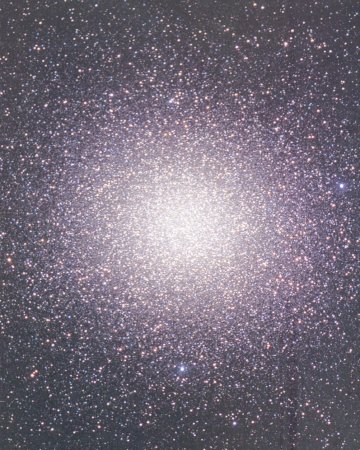
Or, it's amazing we can see stars. And what a special thing a twinkle is.

1 comment:
Light is so cooooooool!!
Post a Comment